International Society of Tropical Foresters
    • Home
    • About Us
      • Mission and Vision
      • Meet the Board
      • Local Chapters
      • Documents & Reports
      • ISTF Members’ Organizations
      • Members Map
      • Contact Us
      • More on ISTF
        • FEATURED RESOURCES
        • ISTF CHAPTER NEWS
        • ISTF GLOBAL NEWS
        • ISTF MEMBERSHIP
    • Get Involved
      • Join Global ISTF
      • Join an ISTF Committee
      • Form an ISTF Chapter
      • Share your news
      • lntro to tropical forests
        • Tropical forests of the Americas
        • Tropical Forests of Africa
        • Tropical forests of the Asia-Pacific
    • ISTF Online Library
      • ISTF Online Library
      • 1 – Current Opportunities
      • 2 – Events and Media
      • 3 – ISTF Resources
      • 4 – Research and Management Resources
      • 5 – Education and Training
      • 6 – Information Organized by Organization
      • 7 – Information Organized by Region and Topic
    • Terra Viva Grants
    • Members Only
    • ISTF Blog
      • ISTF Blog
    • English
    April 2 2024

    Symposium en ligne: ยซ Utilisation du bois de chauffe dans les tropiques : enjeux et perspectives ยป

    Sheila Ward Uncategorized

    Session #4 โ€“ 19 Apr 2024

    Lโ€™International Society of Tropical Foresters (ISTF) et lโ€™Association des forestiers tropicaux et dโ€™Afrique du Nord (AFT) prรฉsentent la premiรจre รฉdition francophone du symposium en ligne ยซย Utilisation du bois de chauffe dans les Tropiquesย : enjeux et perspectivesย ยป le 19 avril 2024 de 16h ร  18h30 Burundi UTC+2), de 15h ร  17h30 Kinasha (RDC) (UTC+1), de 14h ร  16h30 Sรฉnรฉgal (UTC+0), de 10h ร  12h30 EDT Montrรฉal (Heure locale de New York) (UTC -4). Une grande partie des rรฉgions tropicales dรฉpendent du bois de chauffage pour la cuisson des aliments. Vous trouverez une programmation complรจte de lโ€™รฉvรฉnement en cliquant surย ce lien. Les vidรฉos des prรฉsentations seront publiรฉes ultรฉrieurement sur la chaรฎne YouTube de l’ISTF-Global en cliquant surย ce lien. Trouvez votre fuseau horaire ici en cliquant surย ce lien. Inscrivez-vous ร  la session en cliquant surย ce lien . Des questions? Contactez catherine.ruest.bel@gmail.com.

    Horaire du symposium:

    1. Prรฉsentation du International Society of Tropical Foresters. Michael Sterner, ISTF (3 min)
    2. Prรฉsentation de Lโ€™Association des Forestiers Tropicaux et dโ€™Afrique du Nord. Bernard Mallet et Jean-Paul Lanly, AFT (3 min)
    3. Prรฉsentation du sujet du symposium et des prรฉsentateurs. Catherine Ruest Bรฉlanger, Consultante en environnement, Canada (5 min)
    4. Le bois รฉnergie en Afrique : Problรจmes forestiers pour un produit de premiรจre nรฉcessitรฉ dโ€™usage pluriquotidien โ€“ 1975-2015. Alain Bertrand, chercheur retraitรฉ du CIRAD, France.
    5. Le bois de chauffe pour la restauration des terres dรฉgradรฉes en Haรฏti. Frรฉny Alcinat, Centre dโ€™enseignement et de coopรฉration internationale, Haรฏti.
    6. g. Mangroves et bois de feu. Sรฉverin TCHIBOZO, Centre de Recherche pour la Gestion de la Biodiversitรฉ, Bรฉnin.
    7. Bois-รฉnergie et plantations ร  vocation รฉnergรฉtique en Rรฉpublique Dรฉmocratique du Congoย : cas de la province du Nord-Kivu. Dรฉsirรฉ K. Kasekete, Universitรฉ Officielle de Ruwenzori, Rรฉpublique Dรฉmocratique du Congo.
    8. i. Gestion des ressources naturelle et approvisionnement durable en bois รฉnergie des grands centres urbain. Mamane Seini, Association National des Exploitants du Bois du Niger, Niger.
    9. Performance des briquettes issues de sciure d’Isoberlinia pour une valorisation durable de l’espรจce. Samirath C. Nansounon, Unitรฉ de Recherche en Biologie forestiรจre et Modรฉlisation ร‰cologique, Bรฉnin.
    10. Discussion modรฉrรฉe par Catherine Ruest Bรฉlanger et Mike Sterner.

    CONFร‰RENCIERS

    * Alain Bertrand, Chercheur retraitรฉ du Centre de coopรฉration internationale en recherche agronomique pour le dรฉveloppement (CIRAD), France. edenia.consult@gmail.com

    Alain Bertrand

    Alain Bertrand a vรฉcu lโ€™รฉvolution des concepts relatifs ร  la gestion des forรชts tropicales. Passant par le Gabon, la Cรดte dโ€™Ivoire, le Niger, Madagascar, le Mali, le Maroc et dโ€™autres encore, il a couvert lโ€™รฉvolution de la gestion des forรชts tropicales de 1968 ร  2018, en se penchant plus particuliรจrement surย :

    • Lโ€™approvisionnement durable en bois รฉnergie dans un contexte de forte dรฉmographie et de rarรฉfaction de la ressource ligneuse ;
    • La nรฉcessaire implication des populations dans la gestion locale des ressources naturelles, afin que celles-ci contribuent ร  leur dรฉveloppement socioรฉconomique ;
    • Le besoin de politiques transcrites en lois et dรฉcrets.

    Chercheur forestier socio-รฉconomiste, il a publiรฉ nombre dโ€™articles et ouvrages pour communiquer ses rรฉsultats.

    Le bois รฉnergie en Afrique : Problรจmes forestiers pour un produit de premiรจre nรฉcessitรฉ dโ€™usage pluriquotidien – 1975-2015

    En 1972 sรฉvit une grande sรฉcheresse du Sรฉnรฉgal ร  lโ€™ร‰thiopie, causant dโ€™importantes mortalitรฉs humaines et des troupeaux et entraรฎnant le dรฉbut dโ€™un exode rural vers les villes. Auparavant, il nโ€™y avait pas de problรจme avec le bois รฉnergie. Les bailleurs ciblent les plantations comme solution ร  ce nouveau problรจme. Devant lโ€™ampleur de la tรขche, ils changent de stratรฉgie 10 ans plus tard pour se tourner vers les plantations villageoises et la gestion durable des ressources naturelles. Dans les annรฉes 1990, lโ€™attention est plutรดt portรฉe vers les stratรฉgies รฉnergie domestique. Depuis 2000, des plantations dโ€™envergures sont mises en place, notamment sur les plateaux Batรฉkรฉs pour alimenter Kinshasa en bois รฉnergie. Alain Bertrand a participรฉ activement ร  chacun de ces changements et prรฉsente quelques-uns des projets majeurs dans lesquels il a รฉtรฉ impliquรฉ.

    Cette prรฉsentation est en lien avec lโ€™article Le bois, รฉnergie de premiรจre nรฉcessitรฉ en Afrique – Une ressource trop souvent nรฉgligรฉe, par Gรฉrard Madon, publiรฉ dansย Afrique contemporaineย 2017/1-2 (Nยฐย 261-262), pages 201 ร  222, disponible au https://www.cairn.info/revue-afrique-contemporaine-2017-1-page-201.htm

    ย 

    * Frรฉny Alcinat, agronome, Chargรฉ de projet pour le Centre dโ€™enseignement et de coopรฉration internationale (CECI), Haรฏti. frenya@ceci.ca

    Frรฉny Alcinat

    Frรฉny Alcinat est un agronome spรฉcialisรฉ dans les ressources naturelles et le transfert de technologie. Il participe ร  la conception, ร  la mise en ล“uvre et au suivi de projets agroforestiers dans l’ensemble de son pays. Il travaille directement avec les agriculteurs et les organisations locales afin d’amรฉliorer leurs compรฉtences techniques pour faire face au changement climatique.

    Le bois de chauffe pour la restauration des terres dรฉgradรฉes en Haรฏti

    L’industrie du bois de chauffage a longtemps รฉtรฉ accusรฉe d’รชtre ร  l’origine de la dรฉforestation en Haรฏti. Le CECI, une organisation de coopรฉration internationale, et Viridis Terra, une entreprise spรฉcialisรฉe dans la restauration des terres dรฉgradรฉes, ont dรฉcidรฉ de renverser cette histoire et de faire de l’industrie du bois de chauffe un moteur de la reforestation. Cette idรฉe a donnรฉ naissance au projet KLIMA, qui s’est dรฉroulรฉ dans le Nord et le Nord-Est d’Haรฏti de 2017 ร  2021. Depuis, le projet a รฉtรฉ รฉtendu au Sud d’Haรฏti, tandis que les arbres et les mentalitรฉs ont eu le temps de grandir dans le Nord et le Nord-Est. Frรฉny sera ravi de partager les rรฉsultats et les leรงons tirรฉes de cette expรฉrience.

    ย 

    * Sรฉverin TCHIBOZO, membre fondateur et bรฉnรฉvole du Centre de Recherche pour la Gestion de la Biodiversitรฉ (CRGB), Cotonou, Benin. tchisev@yahoo.fr

    Sรฉverin TCHIBOZO

    https://www.linkedin.com/in/s%C3%A9verin-tchibozo-85506851/

    Sรฉverinย TCHIBOZO est membre fondateur du Centre de Recherche pour la Gestion de la Biodiversitรฉ (CRGB, www.crgbbj.org) et expert naturaliste/biodiversitรฉ. Il travaille depuis 28 ans sur la conservation de la nature, lโ€™agriculture, lโ€™entomologie et le dรฉveloppement local. Il a รฉvaluรฉ des projets transfrontaliers sur lโ€™environnement en Afrique de lโ€™Ouest et Centrale.

    Mangroves et bois de feu

    Les mangroves sont dโ€™importants รฉcosystรจmes cรดtiers du sud de la planรจte. Ils fournissent des ressources naturelles aux communautรฉs cรดtiรจres et protรจgent les rรฉgions cรดtiรจres de lโ€™รฉrosion et des effets dรฉvastateurs des phรฉnomรจnes mรฉtรฉorologiques extrรชmes. En Rรฉpublique du Bรฉnin, la loi nยฐ93-009 du 2 juillet 1993 protรจge les mangroves. Malgrรฉ les multiples lois et la sacralisation, les mangroves sont coupรฉes discrรจtement pour les besoins de bois de feu des petits mรฉnages et pour assurer des activitรฉs รฉconomiques. Nous parlerons des diffรฉrents impacts de la coupe des mangroves pour lโ€™usage en bois de feu.

    Selon lโ€™article ยซ ร‰tat des lieux des palรฉtuviers des รฎlots de forรชts naturelles de mangrove en Rรฉpublique du Bรฉnin, disponible au https://societebotaniquedefrance.fr/2023/07/24/le-jb-n108-est-en-ligne/ ยป.

    ย 

    Dรฉsirรฉ K. Kasekete, Enseignant-chercheur, Facultรฉ des Sciences, Universitรฉ Officielle de Ruwenzori, Butembo, Rรฉpublique Dรฉmocratique du Congo. dkasekete@gmail.com

    Dรฉsirรฉ K. Kasekete

    Dรฉsirรฉ Katembo Kasekete est titulaire d’une maรฎtrise en gestion de la biodiversitรฉ et amรฉnagement forestier durable, obtenue avec une spรฉcialitรฉ Forรชt – Environnement. Il se prรฉpare ร  la soutenance de sa thรจse de doctorat dans ce mรชme domaine. Dรฉsirรฉ K. Kasekete est impliquรฉ dans l’enseignement universitaire et la recherche scientifique en RDC. Ses activitรฉs de recherche portent sur la problรฉmatique du bois รฉnergie et son impact sur les รฉcosystรจmes forestiers, ainsi que sur la dynamique des plantations forestiรจres en rรฉgion tropicale (croissance, productivitรฉ, biomasse, stockage du carbone, etc.) Dรฉsirรฉ Katembo Kasekete est basรฉ ร  Butembo, dans la province du Nord-Kivu (RDC).

    Bois-รฉnergie et plantations ร  vocation รฉnergรฉtique en Rรฉpublique Dรฉmocratique du Congoย : cas de la province du Nord-Kivu (Synthรจse bibliographique)

    En Rรฉpublique Dรฉmocratique du Congo (RDC), le bois constitue la principale source dโ€™รฉnergie pour les mรฉnages et certains professionnels. Cette ressource est principalement utilisรฉe sous la forme de charbon de bois en milieu urbain et de bois de chauffe en milieu rural. Si le charbon de bois est essentiellement utilisรฉ pour cuisiner et dans le secteur artisanal, le bois de chauffe est quant ร  lui utilisรฉ pour la cuisine, la cuisson des briques et le chauffage domestique. Le bois utilisรฉ est extrait de toutes les zones boisรฉes accessibles dont les forรชts naturelles, les terres agricoles, les plantations forestiรจres, et mรชme les aires protรฉgรฉes. Pour gรฉrer durablement la ressource bois et sรฉcuriser les approvisionnements, des actions sont indispensables en ce qui concerne prioritairement la diversification des sources dโ€™approvisionnement en bois-รฉnergie, lโ€™amรฉlioration des techniques dโ€™exploitation du bois et de sa carbonisation, etc.

    Selon un article publiรฉ dans la revue Bois et Forรชts des Tropiques, Nยฐ 357, octobre 2023, pp 5 โ€“ 28. https://doi.org/10.19182/bft2023.357.a36927.

    ย 

    *Mamane Seini, Secrรฉtaire Gรฉnรฉral, Association National des Exploitants du Bois du Niger (ANEB-Niger), Niger

    Mamane Seini

    Mamane Seini est secrรฉtaire gรฉnรฉral de lโ€™Association Nationale des Exploitants du Bois du Niger (ANEB-NIGER), qui est une coopรฉration rรฉunissant tous les exploitants, commerรงants, transporteurs, dรฉtaillants et structures locales de gestion du bois au Niger. ANEB-NIGER encourage aussi l’engagement รฉcocitoyen pour un dรฉveloppement durable en mettant les jeunes et les femmes au cล“ur des processus du dรฉveloppement et en tenant compte des aspects รฉconomiques, sociaux et environnementaux.

    Monsieur Seini est รฉgalement consulaire auprรจs de la chambre rรฉgionale dโ€™agriculture de Niamey et membre du conseil dโ€™administration dโ€™Agence pour la Promotion du Conseil Agricole (APCA). Il est รฉgalement membre de plusieurs plateformes et rรฉseaux nationaux, rรฉgionaux et mondiaux tels que la Plateforme changement climatique dรฉveloppement durable, le Forum Forestier Africain (AFF) et le Rรฉseau mondiale sur la gestion des risque et catastrophe (GNDR).

    Gestion des ressources naturelle et approvisionnement durable en bois รฉnergie des grands centres urbain

    Au Niger, plus de 90 % des besoins en รฉnergie domestique des populations rurales et urbainesย sont satisfaits par le bois. Celui-ci restera encore pendant longtemps la principale source dโ€™รฉnergie domestique des populations. Cโ€™est pourquoi le Niger a conรงu et mis en ล“uvre, depuis 1989, la Stratรฉgie Energie Domestique centrรฉe sur une gestion participative, responsable et durable des ressources forestiรจres. Les marchรฉs ruraux de bois รฉnergie qui en dรฉcoulent constituent aujourdโ€™hui des outils de gestion des ressources forestiรจres qui intรจgrent lesย dimensions รฉconomiques, sociales et environnementalesย dans la gestion et dรฉveloppement durable des forรชts.

    ย 

    *Samirath C. NANSOUNON, ย Doctorante en Monitoring et Conservation de la Biodiversitรฉ, Universitรฉ de Parakou,ย Unitรฉ de Recherche en Biologie forestiรจre et Modรฉlisation Ecologique (UR-BioME), Bรฉnin.

    Samirath C. NANSOUNON

    Nansounon Nangnon Samirath Clรฉopรขtre est titulaire depuis peu dโ€™un master en amรฉnagement et gestion des ressources naturelles, spรฉcialitรฉ des sciences et techniques forestiรจres. Elle sโ€™intรฉresse aux questions dโ€™รฉcologie et de conservation de la biodiversitรฉ, mais aussi ร  la technologie du bois. Son sujet de recherche actuel porte sur la technologie du bois et la valorisation des rรฉsidus de bois des espรจces d’arbres Isoberlinia spp. pour des utilisations durables et l’attรฉnuation des effets du changement climatique.

    Performance des briquettes issues de sciure d’Isoberlinia pour une valorisation durable de l’espรจce

    Les rรฉsidus de bois sont une ressource prometteuse pour la production de briquettes en raison de leur caractรจre durable et de leur potentiel de conversion en bioรฉnergie. Cette รฉtude examine le potentiel de transformation des rรฉsidus de bois d’Isoberlinia spp. en briquettes et compare leurs performances au charbon traditionnel. Des paramรจtres tels que le temps d’allumage, la durรฉe d’รฉbullition de l’eau et le temps de combustion complet ont รฉtรฉ mesurรฉs pour รฉvaluer l’aptitude des briquettes produites. Les rรฉsultats rรฉvรจlent des similitudes entre les temps d’allumage des briquettes de bois et le charbon traditionnel, ce qui indique leur potentiel en tant que sources d’รฉnergie alternatives aux propriรฉtรฉs similaires au charbon de bois. De plus, des durรฉes d’รฉbullition d’eau semblables pour diffรฉrents types de combustibles suggรจrent une รฉquivalence dans lโ€™รฉmission d’รฉnergie et la capacitรฉ de combustion, mettant en รฉvidence le potentiel prometteur des briquettes de bois en tant qu’alternatives รฉnergรฉtiques durables.

    April 2 2024

    Invitation to regional encounters with ISTF Members /Invitaciรณn al los encuentros regionales con miembros de la ISTF. 10, 16, 26 April/abril

    Sheila Ward Uncategorized

    Invitation to regional encounters with ISTF Members /Invitaciรณn al los encuentros regionales con miembros de la ISTF. (all members of ISTF are welcome, to any session whatever their region; todos los miembros de ISTF estรกn bienvenidos a cualquier sesiรณn, de cualquier regiรณn).

    The ISTF Americas Member Encounter in ENGLISH will be held on Wednesday 10 April 2024 The encounter will be held at 23:00-01:00 UTC; 20:00-22:00 Belem, Brazil; 19:00 -21:00 EDT and Puerto Rico; 18:00-20:00 CDT and Panamรก; 17:00-19:00 MDT and Mรฉxico D.F; 16:00-18:00 PDT. (Find the time in your time zone at https://www.timeanddate.com/worldclock/converter.html.) The purpose of the meeting is to share our observations and concerns about forestry issues in our countries. Register at THIS LINK. You will be able to register for the meeting up to 2 hours before the event. The deadline to indicate you would like to give a short talk is 6 Apr 2024 on the registration form. Send any questions to tropicalforesters@gmail.com . The Zoom link will be sent before the meeting.

    Agenda:

    1st hour: Short presentations ISTF Board/Members about recent activities and/or key forestry issues in their countries.

    2nd hour: Open discussion among members about the presentations and other topics of interest.

    The ISTF Asia-Pacific Members Encounter IN ENGLISH will be held on Tuesday 16 April 2024 at 08:00-10:00 UTC; 20:00-22:00 Fiji; 16:00-18:00pm Philippines and China, 13:30-15:30pm India, 13:45-15:45pm Nepal; 11:30-13:30 Iran. (Check the time in your time zone at https://www.timeanddate.com/worldclock/converter.html.) The purpose of the meeting is to share our observations and concerns about forestry issues in our countries. Register at THIS LINK. You will be able to register for the meeting up to 2 hours before the event. The deadline to indicate you would like to give a short talk is 10 Apr 2024 on the registration form. Send any questions to tropicalforesters@gmail.com . The Zoom link will be sent before the meeting.

    Agenda:

    1st hour: Short presentations ISTF Board/Chapters/Members about recent activities and/or key forestry issues in their countries.

    2nd hour: Open discussion among members about the presentations and other topics of interest.

    El Encuentro de ISTF para las Amรฉricas EN ESPAร‘OL se celebrarรก el martes el 16 de abril 2024 a las 22:00-24:00 UMT+0; 19:00-21:00 Belรฉm, Brasil, 18:00-20:00 EDT y Puerto Rico; 17:00-19:00 Panamรก y y Ecuador y CDT; 16:00-18:00 Mรฉxico D.F. y MDT; 13:00-15:00 Tijuana y PDT. (Busca para la hora en su zona en https://www.timeanddate.com/worldclock/converter.html.) La reuniรณn serรก en espaรฑol. El propรณsito de la reuniรณn es compartir nuestras observaciones y preocupaciones sobre asuntos forestales en nuestros paรญses. Por favor, registrase en ESTE ENLACE. Puede registrar para la reuniรณn hasta dos horas antes del evento. La fecha limitada para indicar les gustarรญa hacer una presentaciรณn corta es el 10 abril de 2024 en el formulario. Envรญa sus preguntas a tropicalforesters@gmail.com. Enviamos el enlace para la reuniรณn en Zoom antes de la reuniรณn.

    Agenda:

    1ra hora: Presentaciones cortas de la Junta de ISTF/Capรญtulos/Miembros sobre sus actividades recientes y/o problemas fundamentales forestales en sus paรญses.

    2da hora: Discusiรณn abierta entre los miembros sobre las presentaciones y otros tรณpicos de interรฉs.

    The ISTF Africa/Europe Members Encounter in ENGLISH will be held on Friday 26 April 2024 at 14:00-16:00 UTC+0; 17:00-19:00 Kenya, 16:00-18:00 Rwanda and CEST, 15:00-17:00 Nigeria and BST, 14:00-16:00 Ghana. (Check the time in your time zone at https://www.timeanddate.com/worldclock/converter.html.) The purpose of the meeting is to share our observations and concerns about forestry issues in our countries. Register at THIS LINK. You will be able to register for the meeting up to 2 hours before the event. The deadline to indicate you would like to give a short talk is 20 Apr 2024 on the registration form. Send any questions to tropicalforesters@gmail.com . The link for the Zoom meeting will be sent before the meeting.

    Agenda:

    1st hour: Short presentations ISTF Board/Chapters/Members about recent activities and/or key forestry issues in their countries.

    2nd hour: Open discussion among members about the presentations and other topics of interest.

    We will be scheduling a meeting for ISTF members in French for July or August. / Nous planifierons une rรฉunion pour les membres de l’ISTF en franรงais en juillet ou en aoรปt.

    January 13 2024

    Online Symposium: Legacy of the Tropical Forest Foundation 19 Jan 2024

    Sheila Ward Uncategorized

    The International Society of Tropical Foresters (ISTF) and the International Forestry Working Group of the Society of American Foresters (IFWG-SAF) are offering the online symposium โ€œLegacy of the Tropical Forest Foundationโ€ on Friday 19 January 2024 for 2.5 hours, at 7-930am Seattle, 10am-1230pm Washington DC, 10pm-1230am Jakarta. The Tropical Forest Foundation was active from 1990 to 2015, with independent branches in Brazil, Indonesia, and Guyana, South America, continuing today. The TFF was a unique forum that engaged industry, conservation and researchers in productive dialogue about tropical forestry. The TFF had much impact by developing techniques and demonstration projects for low impact logging for the tropics, and the influence of the TFF continues today.

    More information is posted at https://tropicalforesters.org/blog/2024/01/13/online-symposium-legacy-of-the-tropical-forest-foundation-19-jan-2023/. Find your time zone at https://www.timeanddate.com/worldclock/converter.html. Register for the session at https://forms.gle/gNxFG59PDHN4mam96. Questions? Contact tropicalforesters@gmail.com

    Symposium schedule:

    a. Introduction to ISTF and IFWG-SAF. Sheila Ward, ISTF (2 min)

    b. Intro to Symposium and speakers. Mike Sterner, ISTF (5 min)

    c. History of the Tropical Forest Foundation. Keister Evans, Forest Carbon Offsets, LCC. USA. (10 min)

    d. Development and Implementation of Reduced Impact Logging by the Tropical Forest Foundation. Jim Bowyer, University of Minnesota, USA (10 min)

    e. Collaboration for the Tropical Forest Foundation: Education, research, and outreach. A. L. (Tom) Hammett, Virginia Polytechnic Institute and State University, USA (15 min)

    f. Some Lessons Learned from Johan Zweede, Art Klassen, and the Rest of TFF. Jack Putz, University of Florida, USA (15 min)

    h. TFF: Reduced Impact, Improved Income & Better Market Credibility. Hasbie HASBILLAH, Tropical Forest Foundation-Indonesia (15 min)

    i. Open Discussion (Moderators Sterner / Ward โ€“ 50 min)

    SPEAKERS

    *Keister Evans, Former Executive Director/President, Tropical Forest Foundation; President/Owner, International Woods, Inc. of Virginia; President/CEO Forest Carbon Offsets, LCC. USA. keisterevans@forestcarbonoffsets.net

    Keister Evans

    Keister Evans was co-founder of the Tropical Forest Foundation (TFF) in 1990 and served as TFF Executive Director (1990-2010) and President/Executive Director (2009-2010). Keister received his BS and MS from Virginia Tech and his early work experience included being a VA Tech County Agricultural Extension Agent in Virginia. He has served as the Executive Director of the American Rose Society, the American Horticultural Society, and the International Wood Products Association. He currently is President/Owner of International Woods, Inc. of Virginia (1982- ), and President/CEO of Forest Carbon Offsets, LCC (2009- ).

    History of the Tropical Forest Foundation

    The Tropical Forest Foundation (TFF) was formed in 1990 as the result of a Tropical Forestry Workshop held at the Smithsonian Institution in October 1989. The workshop was sponsored by the International Wood Products Assn (IWPA) in response to severe criticism by international publications and NGOs as having major responsibility for the rapidly diminishing tropical forests. The workshop was suggested by and chaired by Dr. Thomas Lovejoy, an official at the Smithsonian (who also served as the first Chairman of TFF), and involved authorities in tropical forestry and related disciplines from major tropical timber regions and the U.S. The workshop concluded that the tropical forest can be used and retained if given economic value and sustainable harvesting methods are practiced. TFF then set forth to established offices and demonstration projects in Africa, Indonesia, Brazil and Guyana, South America. A concept known as Reduced Impact Logging (RIL), was introduced by TFF, and demonstrated and taught at the forestry training camps. Thousands of individuals have received TFF RIL training and vast areas of tropical forests have been affected. These initial efforts and the concept of Reduced Impact Logging have been widely accepted and continue to be practiced in the tropical timber trades.

    *Jim Bowyer, Former Chairman, Tropical Forest Foundation; Professor Emeritus, University of Minnesota Department of Bioproducts and Biosystems Engineering. USA. jimbowyer@comcast.net

    Jim Bowyer

    Bowyer is a Professor Emeritus, University of Minnesota Department of Bioproducts and Biosystems Engineering. A specialist in wood-based bio-products and life-cycle assessment, and elected fellow of the International Academy of Wood Science, Bowyer has authored several books and numerous scientific articles. Bowyer has served as President of the International Society of Wood Science and Technology and of the Forest Products Society, and as Vice President and co-founder of the Consortium for Research on Renewable Industrial Materials. He joined the TFF Board of Directors in 1995, and served as Chairman 2006-2008. He is currently a Senior Contributor with the Minneapolis-based Dovetail Partners consulting firm.

    Development and Implementation of Reduced Impact Logging by the Tropical Forest Foundation.

    In this presentation, findings that informed the development of TFF training programs and the Reduced Impact Logging (RIL) standard will be discussed. An initial project at Cauaxi, Brazil dramatically illustrated the differences between logging using traditional methods vs. responsible logging employing best practices. TFF built upon this project, creating training programs within a larger surrounding concession where those involved in the logging industry could come to learn better ways of doing things, and where scientists, educators, and others could come to view and study impacts of forest operations. The organizational structure of TFF will be described as will the basic philosophy of training site selection and program development. The nature of training programs, and development of region-specific training materials will also be discussed.

    * A. L. (Tom) Hammett, Professor, Sustainability, Design and Innovation, and lead of the Non-timber Forest Products Program, Department of Sustainable Biomaterials, Virginia Polytechnic Institute and State University, Blacksburg, Virginia, and Research Faculty, Future Generations University, Franklin, West Virginia USA. himal@vt.edu  

    A. L. (Tom) Hammet

    Tom focuses on human and institutional capacity development (HICD) and sustainable nature-based enterprise development, specializing in non-timber forest products and services. He has served Virginia Tech since 1995 as Professor in the area of Sustainability, Innovation and Design in the Department of Sustainable Biomaterials, College of Natural Resources and Environment (CNRE). From 2005 to 2015, he served on the Board of the Tropical Forest Foundation. Tom seeks to improve educational opportunities and link them to local enterprise development and sustainment of natural resources. He has served as project director for a global agricultural education and training capacity program. Tom has worked in over forty countries, including developing agri-business training resources in Armenia, and the utilization of specialty crops and forest products in Thailand. In 2023 he led a group of Virginia educators to work with university faculty in Tanzania and Kenya.

    Collaboration for the Tropical Forest Foundation: Education, research, and outreach

    The legacy of building and supporting training sites and making RIL training available to harvesting and management entities had long lasting impact on forest conservation. While the Foundation made important progress in developing Reduced Impact Logging and then promoting its use, other areas emerged as critical to forest conservation. Extending the role of the Tropical Forest Foundation by reaching out to educational institutions through our board members, and new partners became increasingly important. Work developed in new areas included early research with carbon, the impact of mining on forests, and incorporating examples from our work in classroom curriculum and other materials. Working relationships with forest landowners, both government and private, was important for the Foundation. Building linkages and facilitating education and research collaboration with non-government organizations and universities was a natural first step.

    Francis E. (Jack) Putz. Distinguished Professor of Biology and Forestry, University of Florida, USA; and Forest Research Institute, University of the Sunshine Coast, Queensland fep@ufl.edu

    F.E. “Jack” Putz

    F.E. โ€œJackโ€ Putz is a researcher focused on improvements of the fates of tropical forests through improved management for timber, non-timber forest products, biodiversity, and other natural values. He served on the TFF Permanent Review Committee in 1993 and on the TFF Board 1999-2002, but was much involved with TFF throughout its existence, benefiting greatly from the tutelage of Johan Zweede and Art Klassen, late and lamented leaders in tropical forestry.  Jack is a professor at the University of Florida (since 1982) and at the University of the Sunshine Coast in Queensland, Australia (since 2023).

    Some Lessons Learned from Johan Zweede, Art Klassen, and the Rest of TFF

    I shared with TFF my career-long efforts to improve the fates of tropical forests through improved management but only joined the Board in 1999. Long before that I was a student of two late and lamented TFF forest engineers, Johan Zweede and Art Klassen. My formal training as an ecologist did not prepare me to implement the Reduced-Impact Logging (RIL) we all endorsedโ€”thatโ€™s where the expertise of Johan and Art were so critical. In retrospect, I should have been more involved with TFF from the outset; academics, like me, are seldom offered opportunities to interact with representatives of major corporations involved in the forest sector (e.g., Caterpillar and Stihl) or with those involved in the international trade in forest products. Since its closure in 2015, the platform provided by TFF has not been replicated but is much needed.

    Hasbie Hasbillah, Executive Director, Tropical Forest Foundation Indonesia. Indonesia; Member, Board of Directors Indonesia Ecolabel Institute hasbie@tff-indonesia.org

    Hasbie HASBILLAH

    Hasbie HASBILLAH has more than 30 years of experience in forest management, including planning, operations, environment, industry, and social and policy of natural and plantation forests in Indonesia, South East Asia, and the Pacific. He has conducted extensive fieldwork for planning and operational logging to implement Reduced Impact Logging (RIL). Hasbie has been lead auditor for both the International and National Standards for Sustainable Forest Management and Palm Oil Certification He is a RIL Carbon trainer who also conducts Assessment of High Conservation Value, High Carbon Stock and Climate Change. In the last ten years Hasbie, has pursued Forest Carbon accounting for natural forests.

    TFF: Reduced Impact, Improved Income & Better Market Credibility

    TFF is an international coalition of industry, conservation, and scientific leaders working to achieve to the sustainable management of tropical timber. TFF has established demonstration models and training schools to show the advantages and teach the principles of sustainable forest management and Reduced Impact Logging (RIL), including Reduced Impact Logging Carbon (RIL Carbon). TFF promotes sustainable tropical forest management by gathering and disseminating information about its benefits and by teaching proper management practices to promote trade in forest products from legally sourced and sustainably managed timber. Adoption of RIL will: 1) Reduce impact on soil and future crop trees up to 50 %; 2) Save money up to 20%, with improved efficiency, higher productivity, less waste, less conflict; 3) Promote market credibility; and 4) Reduce emissions of CO2 by 30 to 60 %. TFF has contributed to the success of forest certification of more than 2 million hectares by FSC standards in Indonesia, Malaysia, and Papua New Guinea.

    December 27 2023

    Simposio en lรญnea: ” La leรฑa en el tropico: De las cocinas a la deforestaciรณnโ€ Sesiรณn #3 โ€“ el 12 de enero de 2024

    Sheila Ward Uncategorized

    La Sociedad Internacional de Forestales Tropicales (ISTF) y el Grupo de Trabajo de Silvicultura Internacional de la Sociedad de Silvicultores Americanos (IFWG-SAF) ofrecen una tercera sesiรณn del simposio en lรญnea ” La leรฑa en el tropico: De las cocinas a la deforestaciรณnโ€ en el viernes el 12 de enero de 2024 a las 16:00 Costa Rica y Mรฉxico DF, 17:00 Perรบ, 22:00 UTC. Muchos de los trรณpicos dependen en combustibles de madera para cocinar. Busca para su hora en https://www.timeanddate.com/worldclock/converter.html. Registarse para la sesiรณn en ESTE ENLACE.

    ยฟPreguntas? Contactar a tropicalforesters@gmail.com

    Informaciรณn sobre Sesiรณn #1 (ingles) se encuentra en ESTE ENLACE . Los videos de las presentaciones de Sesiรณn #1 se encuentra en ESTE ENLACE . Informaciรณn sobre Sesiรณn #2 (ingles) se encuentra en ESTE ENLACE. Los videos de las presentaciones de Sesiรณn #2 se encuentra en ESTE ENLACE.

    El programa de la Sesiรณn #3:

    1. Introducciรณn al simposio. Sheila Ward o Mike Sterner, ISTF (5 minutos)
    2. Introducciรณn de los presentadores. Luis Armando Aznar Molina, ICA-Tren Maya, Mรฉxico (5 minutos)
    3. Consumo de leรฑa y carbรณn vegetal y su impacto en la deforestaciรณn de bosques naturales en Comunidades Nativas de Aguaytรญa – Perรบ. Jorge รlvarez Melo, Profesor, Universidad Nacional Agraria de la Selva, Perรบ (15 minutos)
    4. Anรกlisis financiero de una plantaciรณn familiar de Gliricidia sepium. Carlos Navarro, CATIE, Jubilado, Costa Rica (15 minutos)
    5. Manejo local de rebrotes para el abasto de leรฑa y carbรณn en una regiรณn indรญgena de Mรฉxico. Patricia Gerez Fernรกndez, CITRO – Universidad Veracruzana, Mรฉxico. (15 minutos)
    6. Leรฑa y carbรณn en la nueva ruralidad: Percepciones de cambio en Sierra de Zongolica, Mรฉxico. Antonio Sierra Huelsz, Investigador posdoctoral CONACyT, Universidad de Guadalajara, Mรฉxico (15 minutos)
    7. Discusiรณn abierta (Moderador: Luis, Mike y/o Sheila ~60 minutos)

    PRESENTADORES:

    *Jorge รlvarez Melo, Profesor, Universidad Nacional Agraria de la Selva, Tingo Marรญa, Huรกnuco, Perรบ jorge.alvarez@unas.edu.pe / jorge.alvarezm10@gmail.com

    Jorge รlvarez Melo

    Ingeniero en Recursos Naturales Renovables, Menciรณn Forestales. Egresado de la Maestrรญa en Conservaciรณn de Recursos Forestales de la Universidad Nacional Agraria La Molina. Con capacitaciรณn especรญfica en Marco normativo forestal y ambiental, instrumentos y herramientas asociadas a la gestiรณn forestal y de fauna silvestre. Manejo, aprovechamiento, certificaciรณn y trazabilidad forestal. Restauraciรณn de ecosistemas forestales y medidas de mitigaciรณn y adaptaciรณn al cambio climรกtico. Profesor en la Escuela Profesional de Ingenierรญa Forestal de la Universidad Nacional Agraria de la Selva en Tingo Marรญa (Huรกnuco-Perรบ). Determinaciรณn y evaluaciรณn de bosques de alto valor de conservaciรณn, participando en proyectos, asesorรญas y consultorรญas.

    Consumo de leรฑa y carbรณn vegetal y su impacto en la deforestaciรณn de bosques naturales en Comunidades Nativas de Aguaytรญa – Perรบ

    La investigaciรณn se desarrolla en las comunidades nativas de Yamino, Mariscal Cรกceres y Santa Rosa, ubicadas en la cuenca media del rรญo Aguaytรญa, cuya finalidad principal es evaluar el efecto del consumo de leรฑa y carbรณn vegetal en la deforestaciรณn de los bosques amazรณnicos. La investigaciรณn es de naturaleza aplicada, prรกctica y descriptiva y consiste en realizar evaluaciones de campo, determinando la situaciรณn actual de los bosques, mediante el uso de encuestas a la poblaciรณn local. Ademรกs, se pretende estimar la superficie de bosques que vienen siendo afectado por la extracciรณn de leรฑa y carbรณn, fortalecer capacidades locales, para formar aliados en la conservaciรณn y recuperaciรณn de los bienes y servicios ecosistรฉmicos, a travรฉs de estrategias de restauraciรณn de paisajes forestales, disminuir la presiรณn antrรณpica hacia los bosques, mediante el consumo eficiente de leรฑa y carbรณn para uso domรฉstico, proveniente de plantaciones forestales con especies adecuadas para tal fin.

    *Carlos Manuel Navarro. Investigador Jubilado, Centro Agronรณmico Tropical de Investigaciรณn y Enseรฑanza (CATIE), Costa Rica. carlosmanuelnavarro@gmail.com

    Carlos Manuel Navarro

    Carlos Navarro estudia ingenierรญa forestal en el TEC, su tesis de bachillerato fue sobre bosque secundario seco, su tesis de maestrรญa fue sobre modelos de crecimiento de P. quinata. Fue Coordinador del proyecto Leรฑa, el cual investigรณ al inicio 150 especies forestales. Su pasiรณn por el estudio y la conservaciรณn de los รกrboles y su diversidad genรฉtica hicieron que se involucrara en una gran colecciรณn para la conservaciรณn de la caoba (Swietenia macrophylla), recogiรณ muestras de Mรฉxico a Panamรก y Bolivia. Hizo su doctorado en la Universidad de Helsinki y su tesis doctoral versรณ sobre los recursos genรฉticos de C. odorata L.

    Anรกlisis financiero de una plantaciรณn familiar de Gliricidia sepium

    La leรฑa es utilizada en la mayorรญa de los hogares rurales de Centroamรฉrica, se estima que alrededor de un 80 por ciento de la poblaciรณn consume leรฑa para cocinar. Ademรกs, muchas industrias de pequeรฑa y mediana escala la utilizan para la elaboraciรณn de sus productos. Luego de evaluar el potencial de producciรณn para leรฑa de alrededor de 150 especies. Se escogiรณ entre ellas el G. sepium, especie leguminosa fijadora de nitrรณgeno, y se realizรณ un aprovechamiento de una pequeรฑa plantaciรณn, se obtuvo la producciรณn por hectรกrea y se elaborรณ un anรกlisis financiero. Los resultados muestran que esta especie tiene un alto potencial para la producciรณn y satisfacciรณn de las necesidades de leรฑa de los hogares rurales.

    *Patricia Gerez Fernรกndez. Acadรฉmica del Centro de Investigaciones Tropicales, en la Universidad Veracruzana. Xalapa, Veracruz, Mรฉxico. pgerez@gmail.com

    Patricia Gerez Fernรกndez

    Estudiรฉ Biologรญa en la Universidad Nacional Autรณnoma de Mรฉxico (UNAM); Maestrรญa en Ciencias Forestales en Yale University; Doctorado en la UNAM. Trabajรฉ diez aรฑos en certificaciรณn forestal en el Consejo Civil Mex para la Silvicultura Sostenible A.C., bajo los estรกndares del FSC; colaborรฉ siete aรฑos en el proyecto de gestiรณn compartida de cuencas y diseรฑo del programa de compensaciรณn por servicios ambientales hidrolรณgicos con SENDAS, A.C. en Xalapa, Veracruz. Mi experiencia e intereses son manejo forestal comunitario/campesino, ecologรญa forestal, recursos de uso comรบn, usos tradicionales de los bosques, y dinรกmicas de uso del suelo y de los bosques manejados a largo plazo.

    Manejo local de rebrotes para el abasto de leรฑa y carbรณn en una regiรณn indรญgena de Mรฉxico

    En las zonas rurales del trรณpico la madera es la fuente de energรญa mรกs accesible. Numerosos trabajos abordan eficientizar su consumo; sin embargo, pocos documentan el manejo local de especies dendroenergรฉticas. En la sierra nahua de Zongolica, Veracruz los sistemas agroforestales tradicionales se conforman con bosques mixtos, plantaciones forestales, milpas y pastos para borregos, donde se producen alimentos, madera, lana, leรฑa y carbรณn vegetal, esenciales para el bienestar familiar. Documentamos las prรกcticas de manejo a especies arbรณreas utilizadas para dendroenergรญa. El abasto de materia prima para leรฑa y carbรณn proviene de aprovechar rebrotes o coppice de Quercus, Alnus y otras especies, es un sistema cรญclico (5 hasta 15 aรฑos), con podas periรณdicas. Los fragmentos arbolados se ubican en รกreas de mayor pedregosidad y pendiente en las parcelas. Este manejo expresa un conocimiento ecolรณgico tradicional especializado y mantiene una diversidad de encinos, en riesgo por expansiรณn de plantaciones de pino y desinterรฉs de los jรณvenes, lo que amenaza el abasto dendroenergรฉtico y las especies.

    *Josรฉ Antonio Sierra Huelsz. Investigador posdoctoral CONACyT, Centro de Investigaciones Tropicales, Universidad Veracruzana. Xalapa, Mรฉxico. (en la que se hizo el trabajo); Investigador posdoctoral CONACyT, Centro Universitario de Ciencias Biolรณgicas y Agropecuarias, Universidad de Guadalajara. Zapopan, Mรฉxico. (actual); Associate, People and Plants International; jashpat@gmail.com

    Josรฉ Antonio Sierra Huelsz

    Josรฉ Antonio Sierra Huelsz es mexicano, biรณlogo y maestro en ciencias biolรณgicas por la Universidad Nacional Autรณnoma de Mรฉxico, y doctor en ciencias forestales con una especialidad interdisciplinaria en Conservaciรณn y Desarrollo Tropical por la Universidad de Florida. Antonio ha trabajado y realizado estancias posdoctorales en diversas universidades mexicanas y ha colaborado con iniciativas de la sociedad civil y la academia en temas de manejo forestal comunitario, productos forestales no maderables, sistemas agroforestales, agrobiodiversidad, entre otros. El trabajo que presenta lo realizรณ de manera colaborativa como parte de una estancia posdoctoral en el Centro de Investigaciones Tropicales, Universidad Veracruzana.

    Leรฑa y carbรณn en la nueva ruralidad: Percepciones de cambio en Sierra de Zongolica, Mรฉxico

    La leรฑa y el carbรณn son elementos clave para los medios de vida rurales en Latinoamรฉrica. Mientras que generalmente la leรฑa cubre las necesidades energรฉticas domรฉsticas, el carbรณn se produce para mercados urbanos. Este trabajo se centra en la Sierra de Zongolica (SZ), una regiรณn indรญgena montaรฑosa del E de Mรฉxico. Usando el concepto de nueva ruralidad, exploramos las percepciones locales de cambio en la provisiรณn, producciรณn, uso y subministro de leรฑa y carbรณn en la SZ. Basados en entrevistas a distintos actores, realizamos anรกlisis principalmente cualitativos los cuales nos permitieron identificar las diferencias entre leรฑa y carbรณn para la SZ, tanto en las especies usadas y su manejo, como en las tendencias y dinรกmicas socioecolรณgicas asociadas.

    October 17 2023

    Fundraiser for ISTF: Strengthening ISTF to serve you and forests better!

    Sheila Ward Uncategorized

    The International Society of Tropical Foresters has opened a fundraising campaign at Paypal https://www.paypal.com/pools/c/8YeclaXV3J to strengthen ISTF to serve members and chapters better. The fundraiser closes on 4 November 2023.

    ISTF is an information-sharing network promoting scientific knowledge and best practices for the sustainable, equitable conservation and management of the worldโ€™s tropical forests. We now have over 2300 members in 110 countries. Membership is free and open to all who are committed to the conservation and sustainable use of tropical forest resources. ISTF has been running entirely on volunteer labor and minimal funding. We want to keep membership free to be as inclusive as possible, especially for our members from tropical countries.

    We need your help in order to serve members and chapters better, reach more people, and improve our flow of information on tropical forest resources. We want to do this by improving the website (https://tropicalforesters.org), including a members-only platform to help members connect to each other, improving virtual conferencing and the Newsletter, and translating resources to Spanish and French for our members in Latin America and Francophone Africa.

    Donations are processed through the PayPal Giving Fund, a 501(c)(3) charity, and are tax-deductible in the USA (subject to the terms at https://www.paypal.com/webapps/mpp/givingfund/policies/donor-terms-of-services. The PayPal Giving Fund doesn’t charge any transactions fees, although your credit card and bank transfer fees would still apply.

    Please contact tropicalforester@gmail.com with any questions.

    September 22 2023

    Online Symposium: “Fuelwood in the tropics: From cooking stoves to deforestation” Session #2 – 10 Oct 2023

    Sheila Ward Uncategorized

    Online Symposium: “Fuelwood in the tropics: From cooking stoves to deforestation” Session #2 – 10 Oct 2023

    The International Society of Tropical Foresters (ISTF) and the International Forestry Working Group of the Society of American Foresters (IFWG-SAF) are offering the second session of the online symposium “Fuelwood in the tropics: From cooking stoves to deforestation” on Tuesday 10 October 2023 at 10 EDT โ€“ 12 EDT (New York City Local Time | UTC โ€“ 4). More information is posted at xxx. Find your time zone at https://www.timeanddate.com/worldclock/converter.html. Register for the session at https://forms.gle/d58cv1aGxnxChtLh9.

    The presentation videos from Session #1 are available at https://www.youtube.com/playlist?list=PLwGsom_l27zq4vUOEqEvPajLMeFuK2BfY .

    Symposium schedule:

    a. Introduction to the symposium series. Sheila Ward, ISTF (2 min)

    b. Intro to speakers and topic. Puneet Dwivedi, Warnell School of Forestry and Natural Resources, University of Georgia, USA & IFWG-SAF (5 min)

    c. Efficient Fuelwood Use as a Strategy to Reduce Household Pressure on Natural Forests of the Guinea Savannah Zone of Nigeria. Omotayo Idris Ajao, University of Ilorin and Save Sahara Network, Nigeria.(15 min)

    d. Charcoal Movements inside Zambian Cities: From Peri-urban Markets to Low and Medium Density Suburbs. Nixon Chisonga, School of Social Sciences, Mulungushi University, Zambia (15 min))

    e. Potential of Carbonized Briquettes to Enhance Sustainability in Woodfuel Supply in Sub-Saharan Africa. Timothy Namaswa, School of Biological Sciences, University of Aberdeen, Scotland, and Kenya Forestry Research Institute, Kenya (15 min)

    f. The KLIMA project: Firewood for reforestation in Haiti. Freny Alcinat, Centre dโ€™enseignement et de coopรฉration internationale, Haiti and Catherine Ruest Belanger, Viridis Terra International, Canada (15 min)

    g. Open Discussion (Moderators Dwivedi / Ward โ€“ 50 min)

    The symposium videos will also be posted on the ISTF YouTube Channel at https://www.youtube.com/channel/UC64ds-AZiXfNPtJ-gX4Jw1w

    SPEAKERS

    *Omotayo Idris Ajao, Graduate Teaching and Research Assistant at the Department of Forest Resources Management, University of Ilorin and Program Coordinator at Save Sahara Network, Nigeria

    Omotayo Idris Ajao

    Omotayo Idris AJAO, graduated with a B. Forestry and Wildlife degree from the University of Ilorin, Ilorin, Nigeria. Currently, he serves as a Graduate Research and Teaching Assistant in the same department, working under the guidance of Dr. Folaranmi Babalola. During his time as an undergraduate, Omotayo collaborated with senior researchers on projects related to Ecological Assessment, Land use and Land volume equations, Silviculture, and Environmental Education. His research interests revolve around Forest dynamics and Forest Ecology, Biodiversity Conservation, Silviculture, and Forest Economics. Omotayo has actively participated in numerous national and international conferences, further enriching his academic and professional experience.

    Efficient Fuelwood Use as a Strategy to Reduce Household Pressure on Natural Forests of the Guinea Savannah Zone of Nigeria

    The research investigates the socio-economic factors influencing the adoption and utilization of efficient cookstoves in selected rural communities of the Guinea Savanna zone in Nigeria, before their introduction. The project specifically focuses on rural households located in the Guinea Savanna zone of Kwara State, where charcoal production and firewood collection by households are prevalent. Remarkably, nearly all the surveyed women expressed their willingness to transition from their current inefficient three-stone cookstoves to the improved and efficient cookstoves proposed by the research team. Subsequently, the research team introduced the improved cookstoves to the rural communities with the objective of reducing pressure on natural forests. The cookstoves were constructed for the community members, and they received training on how to build them. Additionally, the project involved the participation of the youth in the communities, as well as the community school teachers, to ensure sustainability by introducing conservation education into their school curriculum.

    *Nixon Chisonga, Lecturer, Environmental Issues in Less Developed Countries, School of Social Sciences, Mulungushi University, Zambia

    Nixon Chisonga

    Nixon Chisonga is a Ph.D candidate at the University of Lusaka (Zambia). He holds an M.Phil and Honours Degrees from the University of Cape Town (South Africa) and a BA Degree from the University of Zambia (Zambia). He is a Lecturer of Environmental Issues in the Third World Countries at Mulungushi University. In 2011/12, he designed the Socio-economic component of the Integrated Land Use Assessment project (ILUA) for Zambia and finalised as a Forest Livelihoods and Economic Survey. He has over the years conducted research studies on renewable energy; conservation farming; as well as land tenure and socio-economic dynamics of Game Management Areas of North-western province of Zambia.

    Charcoal Movements inside Zambian Cities: From Peri-urban Markets to Low and Medium Density Suburbs

    This is the first study to investigate the contribution of low and medium density suburbs to charcoal consumption inside two Zambian cities: Lusaka and Kitwe. The study used rapid assessment surveys at two intervals to examine charcoal movement between 2012 and 2019. A total of 941 individual consumers of charcoal at active charcoal markets in peri-urban areas were interviewed. Individuals were selected to demonstrate the movement of charcoal to the consumersโ€™ areas of residence. Semi-structured questionnaires guided the data collection, and quantitative and qualitative analysis were used. We found that charcoal was widely distributed to low, medium and peri-urban households for household use. Peri-urban areas were mainly receiver and distributor points for onward charcoal movement into low and medium density suburbs of Zambian cities. We used a postcolonial analytical framework to assert that information should not be distorted nor rooted in any historical imbalance of knowledge and power generation, but within local communities in which charcoal consumption occurred.

    *Timothy Namaswa, 1). School of Biological Sciences, University of Aberdeen, Scotland, U.K. 2). National Forest Products Research Programme, Kenya Forestry Research Institute, Nairobi, Kenya

    Timothy Namaswa

    Timothy Wekesa Namaswa is a commonwealth scholar from Kenya, working as a research scientist at Kenya Forestry Research Institute (KEFRI) under National Forest Products Research Programme. Currently, Mr Namaswa is a PhD student in Plant Science at the University of Aberdeen in Scotland, specializing in optimization of biochar production from most common crop residues in Sub-Saharan Africa for bioenergy production and soil amelioration for sustainable development.

    Potential of Carbonized Briquettes to Enhance Sustainability in Woodfuel Supply in Sub-Saharan Africa

    Carbonized briquettes from agricultural residues could reduce woodfuel demand and deforestation by providing energy that could otherwise be provided by woodfuel. This paper estimated the potential of carbonized briquettes as a source of energy in Sub-Saharan Africa (SSA) using secondary data. SSA experienced a woodfuel supply-demand deficit of 55.4% by 2022. Annually, SSA generated 469.36 x 10⁶ t yr-1 of surplus residues, that could produce 221.09 x10⁶ t yr-1 of biochar, with the potential of 1700.26 x 106 GJ yr-1 of energy that could otherwise be generated by 249.33 x 10⁶ t yr-1 of wood, that is equivalent to 11.2% of annual woodfuel demand.

    *Freny Alcinat1 and Catherine Ruest Belanger2

    1 Project Manager at CECI (Centre dโ€™enseignement et de coopรฉration internationale), Haiti

    2 Consultant for Viridis Terra International, Canada

    Frรฉny Alcinat

    Frรฉny Alcinat is an agronomist specialized in natural resources and technology transfer. He is implicated in the design, implementation and monitoring of agroforestry projects throughout his country, working directly with farmers and local organizations to improve their technical skillsets in the face of climate change.

    Catherine Ruest Bรฉlanger

    Catherine Ruest Bรฉlanger is a forest engineer specializing in smallholder forestry. She acts as a technical support for the implementation of international development projects in Haiti, while also counselling forest owners in Quebec, Canada, in the field of food sovereignty.

    The KLIMA project: Firewood for reforestation in Haiti

    The firewood industry has long been blamed for deforestation in Haiti. CECI, an international cooperation organization, and Viridis Terra International, a company specializing in the restoration of degraded lands, decided to turn that story around and make the firewood industry a driver of reforestation. This idea gave birth to the KLIMA project, which took place in the North and Northeast of Haiti from 2017 to 2021. Since then, the project has been extended to the South of Haiti, whilst trees and mentalities have had time to grow in the North and Northeast. We will be delighted to share results and lessons learned from this experience so far.

    March 28 2023

    Webinars on using the Restor platform for your restoration project

    Sheila Ward News

    You need to get the word out on your restoration project to connect with collaborators, funders, and geo-relevant information. The Restor platform can help you with all three functions. By listing their restoration projects on the platform, ISTF members will gain visibility to both potential collaborators and funders. They will be able to explore site-specific ecological data for planning and monitoring their projects. Restor, the International Society of Tropical Foresters, and Terraformation are teaming up to offer a training webinar on how to load your restoration project on the Restor platform.

    There will be four different occasions to maximize accessibility for different regions. The same content will be presented at each session. Find your time zone with this tool.


    Sessions:

    Monday 3 April 2023 – Africa / Europe

    16:00 GMT, 12:00 Puerto Rico, 16:00 Senegal, 17:00 London, 19:00 Ethiopia.

    Register for 3 April

    https://terraformation.zoom.us/webinar/register/WN_dhFyVujzRqOxQypBZTAQpQ


    Monday 17 April 2023 – North America

    23:00 GMT, 19:00 Puerto Rico, 19:00 New York, 16:00 Seattle, 13:00 Hawaii.

    Register for 17 April

    https://terraformation.zoom.us/webinar/register/WN_SSLHbvZCRfylb4ZMROI-Hw

    Lunes 10 de abril de 2023 – America Latina (espaรฑol)

    23:00 GMT, 19:00 Puerto Rico, 20:00 este de Brasil, 16:00 oeste de Mรฉxico.

    Registrase para 10 de abril

    https://terraformation.zoom.us/webinar/register/WN__3IKzxDQRPW7WRZSjn2TWQ


    Monday 24 April 2023 – Asia-Pacific

    08:00 GMT, 04:00 Puerto Rico, 13:00 Pakistan, 15:00 Jakarta, 20:00 Fiji.

    Register for 24 April

    https://terraformation.zoom.us/webinar/register/WN_BZ7tAXSGR-mA0FgIwl9AQA

    You can register for any session, regardless of your region.


    Session Plan:

    Welcome by ISTF, Restor (3 min)

    Introduction to the Restor.eco platform and how to use it (20 min)

    How Terraformation uses Restor (2 min)

    Q and A (10 min)

    Breakout rooms for practice, with assistance (35 minutes)

    Closing (5 min)

    To do ahead:

    We ask all those who register to participate to visit the RESTOR platform at Restor.eco and create an account here BEFORE the session you will attend. Also, familiarize yourselves with the website. This will allow us to devote the maximum time to helping you put your restoration project on the platform.

    NOTE: Please have a mouse available to use for the webinar practice session. It is much easier to navigate the Restor platform with a mouse.


    About Restor: Restor is a non-profit science-based organization that has been approved as a supporting partner for the UN Decade on Ecosystem Restoration. It is a major, open-source, global hub for restoration projects to list themselves for increased visibility to potential funders and collaborators. It also provides ecological information on just about any location in the world, to help restoration practitioners with planning and other operations.

    For more information on Restor, please see this video and the videos at โ€œAbout usโ€ and โ€œHow it worksโ€ here.

    About Terraformation: Terraformation is a global forestry tech company based in Hawai`i, USA. Its mission is to restore the planetโ€™s forests to capture carbon, revive ecosystems, and build thriving communities. They are committed to biodiversity conservation and reversing climate change through global reforestation efforts. Currently, they are supporting reforestation projects with partners in 12 countries in Africa, Latin America and the Caribbean, Europe, North America, and Asia. They are actors for the UN Decade on Ecosystem Restoration and launched the first-ever Seed to Forest Carbon Accelerator Program focusing on restoring tropical native forests.

    About ISTF: The hInternational Society of Tropical Foresters is an information-sharing, collaborative network dedicated to the conservation and sustainable use of the worldโ€™s tropical forest resources. ISTF has applied to be a technical partner for the UN Decade on Ecosystem Restoration. With 2200+ members in 109 countries, ISTF can help you link to others with similar interests. It is free to join. Become a member today here!

    March 12 2023

    March Update: Calls and Opportunities

    Regina Durst News, Scholarships, Proposals, Opportunities Forestry Scholarship, Monthly update

    Welcome to March! With the International Day of Forests celebrated on March 21st, this month is often a lively time for the forestry community. Amidst the busyness, donโ€™t forget to check out the following opportunities before their deadlines pass!

    SAF Gregory Award

    Every year, the Society of American Foresters (SAF) gives one or more Gregory Awards to outstanding international students (that is, students not currently enrolled in an educational institution in the United States) and early-career professionals, awarding them with a $3,000 scholarship used to attend the SAF Annual Convention. This year, the Convention will be in Sacramento, California, USA, from 25-28 October 2023.

    Applications are due by 15 March 2023. See here for more information on eligibility and criteria.

    See here for eligibility and criteria

    Training Opportunity – Land Accelerator Africa 2023
    Applications are now being accepted for the Land Accelerator Africa 2023, the worldโ€™s first training and mentorship program targeted specifically toward businesses that restore degraded forests, farmland, and pasture. This program is from the World Resources Institute (WRI). Applications close on 31 March 2023.

    Apply now

    ITTO Call for Project Proposals

    The International Tropical Timber Organization (ITTO) call for project proposals for Autumn 2023 is now open. The deadline is 10 April 2023.

    More information here

    Additionally, the report on the updated ITTO Financing structure has been released. ITTO members wishing to submit a Concept Note can do so via the online Submission Form System.

    Second Call: ISTF Newsletter March 2023 Issue

    We need your contributions! The newsletter is an opportunity to showcase your work and share your concerns. We are seeking your contributions to the quarterly newsletter to be shared with the community/members. We invite members to submit general news items, articles, announcements, field practices, research abstracts, etc.

    • General News Items
      • Announcements/Reports (past and future events) and Opportunities (trainings, workshops, conferences, etc.). If possible, please include 1-2 sentences about the event. 50-200 words.
    • ISTF Internal News/Updates
      • Reports of chapter meetings, summaries of events held, etc. Let us know what your chapter has been up to! Up to 500 words.
    • Brief Articles
      • Short and topical submissions: emerging issues related to forests, novel solutions, innovative research findings, and publication abstracts. Up to 500 words.
    • Member Profile
      • A brief professional introduction of yourself. Up to 100 words.
    • Field Practices
      • Short articles on methods that are useful for foresters working in the field, or new techniques based on personal experience. Does not have to meet the criteria for an academic/research journal; we want to hear about your first-hand observations! Up to 500 words.
    • Information on Open Access Publications
      • Useful information in summarized form from open access sources on the internet or other sources with permission of publisher/author. These can include abstracts to journal publications. Up to 500 words.

    Submission Guidelines

    • All articles must be submitted in Word format and include a title. Please do not send submissions in pdf format
    • Photos, images, and graphics are encouraged! (jpg preferred, but other formats accepted)

    The deadline for this issue is 20 March 2023! Please send your contributions to Muhammad Irfan Ashraf, Chief Editor at: newsletteristf@gmail.com

    Lastly, please note that the Dec 2022 ISTF Newsletter issue has been updated. It can now be found at this link here!

    October 6 2022

    Seeking ISTF Proposals for Session at IUFRO 2024

    Regina Durst Uncategorized

    With collaborators, the International Society of Tropical Foresters (ISTF) is developing session proposals for the XXVI IUFRO World Congress 2024 โ€“ Forests and Society towards 2050, to be held 23-29 June 2024 in Stockholm, Sweden. IUFRO invites all who share an interest in the future of forests and forest-related science to submit session proposals!

    Want to contribute? 

    The deadline for session submissions 13 Oct 2022! 

    If you would like to make a presentation in any of the sessions below, please send your name, affiliation, and draft title to tropicalforesters@gmail.com by 8 Oct 2022. 

    You do not need to be 100% sure that you will be attending the Congress! The stronger the indications of interest in these sessions, the more likely they are to be included in the Congress program. The draft proposals (still under development) for all these sessions can be obtained here.

    The updated proposals will be posted periodically until submission. 

    Sessions to be proposed:

    • Smart Agroforestry Practices for Sustainable Livelihood
    • Urban trees & green landscapes: Monitoring and management for providing multiple services
    • Legacy of the Tropical Timber Foundation and sustainable forestry
    • Tropical forest restoration success and how to achieve it
    • Tropical forestry education: Improving preparation for a challenging future
    • Legacy tropical forest data: current status, uses, and securing them
    • Research advances towards sustainability for the high-value Meliaceae
    • Ecology and management of old-growth forests
    September 12 2022

    The Joseph Rock Arboretumโ€”A Garden in the Making

    Prachi Tropical Forest Voices Conservation

    Jill Wagner

    With great pleasure, I would like to announce the initiation of a new Arboretum in Kona, Hawaii. The Joseph Rock Arboretum has been planned over the last ten years. The garden is 48 acres located in the heart of Kailua Kona, an exceptional land.

    https://josephrockarboretum.org/

    The site of the Joseph Rock Arboretum was previously a cattle-grazing land. But, several hundred native Hawaiian dry forest plants and trees have persisted and provided the remnant stands upon which the habitat is built. Over the past two years, more than 3,000 plants have been planted, most of which are native dry forest species. The site does not have irrigation in the field, so we time the planting with the rainy season, and the plants are establishing and adapting to the local weather patterns.  

    There are a few ways to determine if the site has good survival. One is to observe if the out-plants are flowering and seeding. The other is to check if natural regeneration happens in the habitat. At this site, we have observed good flowering and seeding. Besides, we are collecting the seeds to bank them for future restoration. It will enable the community to grow native plant species on their land.

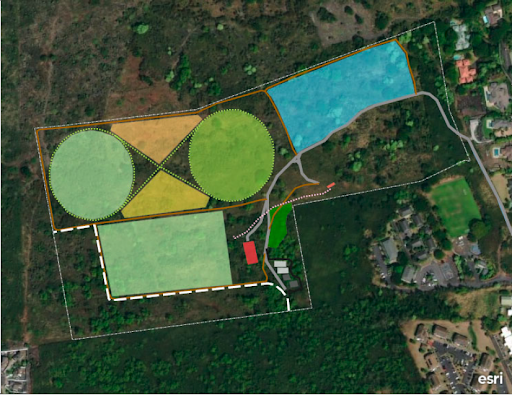
    Arboretum Map
    Dots represent areas where restoration is completed
    Map of Joseph Rock Arboretum

    The mission of the Joseph Rock Arboretum is to collect and study trees, shrubs, and plants from Hawaii and around the world. Its goal is to teach people how to care for the natural environment through hands-on seed collection, seed banking, propagation, and fieldwork. The vision is to support new forest creators as future caretakers of the planet. The Arboretum is primarily a training site for future foresters.  It is the home of Future Forests Nursery (www.forestnursery.com), which has been serving restoration in Hawaii since the 1990s. It is also home to the Hawaii Island Seed Bank (drylandforest.org), which stores native seed collections from over 32 large landowners and agricultural crop seeds for the Hawaii Seed Growers Network (www.hawaiiseedgrowersnetwork.org).  

    The arboretum is curated and contains plant collections from Hawaii, South America, and Australiaโ€”including succulents and a tropical hardwood zone. The nursery facilities and seed bank provide excellent facilities to train visiting foresters, students, and global forestry partners.ย  We are currently building lodging for visitors so they can stay in Hawaii for four weeks and work through the entire restoration cycle.ย 

    We also provide educational experiences for school groups on Hawaii Island. In addition to the Hawaii training experience, we also offer an online 12-month course in Restoration Principles and Practices. It is a comprehensive course with modules in all aspects of restoration to help land managers deepen their understanding of the work and increase capacity.ย 

    For all interested, more information can be found here.

    1 2 3

    OUR STORY

    Founded in the 1950s in response to a worldwide concern for the fate of tropical and subtropical forests, the International Society of Tropical Foresters is committed to the protection, wise management and rational use of the worldโ€™s tropical forests. After a 5 year hiatus, the organization was reactivated in 2017. Since then, more than 1600 people from around the world have joined.

    ISTFโ€™s focus is on being a communication/education network to disseminate scientific knowledge and best practices for the sustainable, equitable management and conservation of the worldโ€™s tropical forests. We want to promote communication between the field practitioner and researchers and policy makers, embracing the interdisciplinary diversity of tropical forestry.

    CATEGORIES

    History of ISTF(2)                     

    ISTF Chapters(2)

    ISTF Mission(3)

    News(3)ย 

    Scholarships, Proposals, Opportunities(1)

    Topical Forest Voices(3)

    Uncategorized(7)

    International Society of Tropical Foresters
      • Facebook
      • LinkedIn
      • Twitter
      • YouTube
      • Home
      • About Us
        • Mission and Vision
        • Meet the Board
        • Local Chapters
        • Documents & Reports
        • ISTF Members’ Organizations
        • Members Map
        • Contact Us
        • More on ISTF
          • FEATURED RESOURCES
          • ISTF CHAPTER NEWS
          • ISTF GLOBAL NEWS
          • ISTF MEMBERSHIP
      • Get Involved
        • Join Global ISTF
        • Join an ISTF Committee
        • Form an ISTF Chapter
        • Share your news
        • lntro to tropical forests
          • Tropical forests of the Americas
          • Tropical Forests of Africa
          • Tropical forests of the Asia-Pacific
      • ISTF Online Library
        • ISTF Online Library
        • 1 – Current Opportunities
        • 2 – Events and Media
        • 3 – ISTF Resources
        • 4 – Research and Management Resources
        • 5 – Education and Training
        • 6 – Information Organized by Organization
        • 7 – Information Organized by Region and Topic
      • Terra Viva Grants
      • Members Only
      • ISTF Blog
        • ISTF Blog
      • English
      © International Society of Tropical Foresters 2026
      Powered by WordPress • Themify WordPress Themes


      Forgot Password
      Please enter your email address or username below.
       
      Please Signup
      *
      *
        Strength: Very Weak
        *
        *
        *
        *
        *
        *
        *
        *
        *
        *
        *
        *
        *
        Country/Region
        • Country/Region
        • Afghanistan
        • Albania
        • Algeria
        • American Samoa
        • Andorra
        • Angola
        • Anguilla
        • Antarctica
        • Antigua and Barbuda
        • Argentina
        • Armenia
        • Aruba
        • Australia
        • Austria
        • Azerbaijan
        • Bahamas
        • Bahrain
        • Bangladesh
        • Barbados
        • Belarus
        • Belgium
        • Belize
        • Benin
        • Bermuda
        • Bhutan
        • Bolivia
        • Bosnia and Herzegovina
        • Botswana
        • Brazil
        • Brunei
        • Bulgaria
        • Burkina Faso
        • Burundi
        • Cambodia
        • Cameroon
        • Canada
        • Cape Verde
        • Cayman Islands
        • Central African Republic
        • Chad
        • Chile
        • China
        • Colombia
        • Comoros
        • Congo
        • Costa Rica
        • Croatia
        • Cuba
        • Cyprus
        • Czech Republic
        • Denmark
        • Djibouti
        • Dominica
        • Dominican Republic
        • East Timor
        • Ecuador
        • Egypt
        • El Salvador
        • Equatorial Guinea
        • Eritrea
        • Estonia
        • Ethiopia
        • Fiji
        • Finland
        • France
        • French Guiana
        • French Polynesia
        • Gabon
        • Gambia
        • Georgia
        • Germany
        • Ghana
        • Gibraltar
        • Greece
        • Greenland
        • Grenada
        • Guam
        • Guatemala
        • Guinea
        • Guinea-Bissau
        • Guyana
        • Haiti
        • Honduras
        • Hong Kong
        • Hungary
        • Iceland
        • India
        • Indonesia
        • Iran
        • Iraq
        • Ireland
        • Israel
        • Italy
        • Jamaica
        • Japan
        • Jordan
        • Kazakhstan
        • Kenya
        • Kiribati
        • North Korea
        • South Korea
        • Kuwait
        • Kyrgyzstan
        • Laos
        • Latvia
        • Lebanon
        • Lesotho
        • Liberia
        • Libya
        • Liechtenstein
        • Lithuania
        • Luxembourg
        • Macedonia
        • Madagascar
        • Malawi
        • Malaysia
        • Maldives
        • Mali
        • Malta
        • Marshall Islands
        • Mauritania
        • Mauritius
        • Mexico
        • Micronesia
        • Moldova
        • Monaco
        • Mongolia
        • Montenegro
        • Montserrat
        • Morocco
        • Mozambique
        • Myanmar
        • Namibia
        • Nauru
        • Nepal
        • Netherlands
        • New Zealand
        • Nicaragua
        • Niger
        • Nigeria
        • Norway
        • Northern Mariana Islands
        • Oman
        • Pakistan
        • Palau
        • Palestine
        • Panama
        • Papua New Guinea
        • Paraguay
        • Peru
        • Philippines
        • Poland
        • Portugal
        • Puerto Rico
        • Qatar
        • Reunion Island
        • Romania
        • Russia
        • Rwanda
        • Saint Kitts and Nevis
        • Saint Lucia
        • Saint Vincent and the Grenadines
        • Samoa
        • San Marino
        • Sao Tome and Principe
        • Saudi Arabia
        • Senegal
        • Serbia and Montenegro
        • Seychelles
        • Sierra Leone
        • Singapore
        • Slovakia
        • Slovenia
        • Solomon Islands
        • Somalia
        • South Africa
        • Spain
        • Sri Lanka
        • Sudan
        • Suriname
        • Swaziland
        • Sweden
        • Switzerland
        • Syria
        • Taiwan
        • Tajikistan
        • Tanzania
        • Thailand
        • Togo
        • Tonga
        • Trinidad and Tobago
        • Tunisia
        • Turkey
        • Turkmenistan
        • Tuvalu
        • Uganda
        • Ukraine
        • United Arab Emirates
        • United Kingdom
        • United States
        • Uruguay
        • Uzbekistan
        • Vanuatu
        • Vatican City
        • Venezuela
        • Vietnam
        • Virgin Islands, British
        • Virgin Islands, U.S.
        • Yemen
        • Zambia
        • Zimbabwe
        *
        Country/Region
        • Country/Region
        • Afghanistan
        • Albania
        • Algeria
        • American Samoa
        • Andorra
        • Angola
        • Anguilla
        • Antarctica
        • Antigua and Barbuda
        • Argentina
        • Armenia
        • Aruba
        • Australia
        • Austria
        • Azerbaijan
        • Bahamas
        • Bahrain
        • Bangladesh
        • Barbados
        • Belarus
        • Belgium
        • Belize
        • Benin
        • Bermuda
        • Bhutan
        • Bolivia
        • Bosnia and Herzegovina
        • Botswana
        • Brazil
        • Brunei
        • Bulgaria
        • Burkina Faso
        • Burundi
        • Cambodia
        • Cameroon
        • Canada
        • Cape Verde
        • Cayman Islands
        • Central African Republic
        • Chad
        • Chile
        • China
        • Colombia
        • Comoros
        • Congo
        • Costa Rica
        • Croatia
        • Cuba
        • Cyprus
        • Czech Republic
        • Denmark
        • Djibouti
        • Dominica
        • Dominican Republic
        • East Timor
        • Ecuador
        • Egypt
        • El Salvador
        • Equatorial Guinea
        • Eritrea
        • Estonia
        • Ethiopia
        • Fiji
        • Finland
        • France
        • French Guiana
        • French Polynesia
        • Gabon
        • Gambia
        • Georgia
        • Germany
        • Ghana
        • Gibraltar
        • Greece
        • Greenland
        • Grenada
        • Guam
        • Guatemala
        • Guinea
        • Guinea-Bissau
        • Guyana
        • Haiti
        • Honduras
        • Hong Kong
        • Hungary
        • Iceland
        • India
        • Indonesia
        • Iran
        • Iraq
        • Ireland
        • Israel
        • Italy
        • Jamaica
        • Japan
        • Jordan
        • Kazakhstan
        • Kenya
        • Kiribati
        • North Korea
        • South Korea
        • Kuwait
        • Kyrgyzstan
        • Laos
        • Latvia
        • Lebanon
        • Lesotho
        • Liberia
        • Libya
        • Liechtenstein
        • Lithuania
        • Luxembourg
        • Macedonia
        • Madagascar
        • Malawi
        • Malaysia
        • Maldives
        • Mali
        • Malta
        • Marshall Islands
        • Mauritania
        • Mauritius
        • Mexico
        • Micronesia
        • Moldova
        • Monaco
        • Mongolia
        • Montenegro
        • Montserrat
        • Morocco
        • Mozambique
        • Myanmar
        • Namibia
        • Nauru
        • Nepal
        • Netherlands
        • New Zealand
        • Nicaragua
        • Niger
        • Nigeria
        • Norway
        • Northern Mariana Islands
        • Oman
        • Pakistan
        • Palau
        • Palestine
        • Panama
        • Papua New Guinea
        • Paraguay
        • Peru
        • Philippines
        • Poland
        • Portugal
        • Puerto Rico
        • Qatar
        • Reunion Island
        • Romania
        • Russia
        • Rwanda
        • Saint Kitts and Nevis
        • Saint Lucia
        • Saint Vincent and the Grenadines
        • Samoa
        • San Marino
        • Sao Tome and Principe
        • Saudi Arabia
        • Senegal
        • Serbia and Montenegro
        • Seychelles
        • Sierra Leone
        • Singapore
        • Slovakia
        • Slovenia
        • Solomon Islands
        • Somalia
        • South Africa
        • Spain
        • Sri Lanka
        • Sudan
        • Suriname
        • Swaziland
        • Sweden
        • Switzerland
        • Syria
        • Taiwan
        • Tajikistan
        • Tanzania
        • Thailand
        • Togo
        • Tonga
        • Trinidad and Tobago
        • Tunisia
        • Turkey
        • Turkmenistan
        • Tuvalu
        • Uganda
        • Ukraine
        • United Arab Emirates
        • United Kingdom
        • United States
        • Uruguay
        • Uzbekistan
        • Vanuatu
        • Vatican City
        • Venezuela
        • Vietnam
        • Virgin Islands, British
        • Virgin Islands, U.S.
        • Yemen
        • Zambia
        • Zimbabwe
        *
        Beginning
        • Beginning
        • Intermediate
        • Advanced
        • Fluent
        *
        *
        *
        *

        (Use Cropper to set image and
        use mouse scroller for zoom image.)

         
        Please Login
        Forget Password
        Dont have account? SIGNUP